Why Digital Marketing Actually Matters Right Now
Look, you don’t need me to tell you the internet runs business now. But it’s still worth pausing on just how fast this happened. Ten years ago “digital marketing” meant a company had a Facebook page and maybe an email newsletter. Now it’s the whole game — SEO, paid ads, content, social, email, analytics, all of it running at once, all of it generating jobs for people who know how to work the machinery.
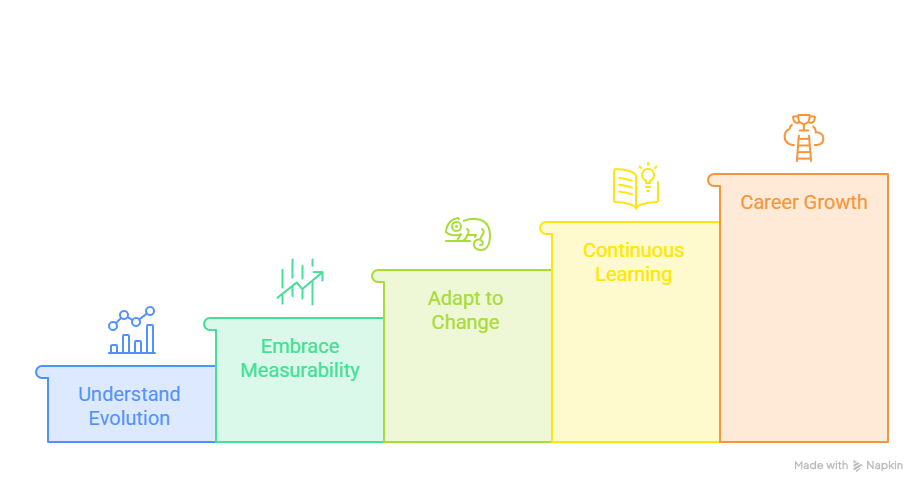
What I think gets missed is why this field is different from old-school marketing. It’s not just that the channels changed. It’s that you can actually watch what’s working. Run a campaign, check the numbers two days later, kill what’s failing, double down on what isn’t. Try doing that with a billboard. That feedback loop is what makes digital marketing so measurable — and honestly, it’s what makes marketers in this space get good so fast. You’re not guessing. You’re adjusting in real time based on actual results.
And because the platforms never sit still — algorithms change, new apps show up out of nowhere, consumer habits shift every year or two — the demand for people who can keep up doesn’t really let up either. Companies aren’t looking for someone who learned SEO in 2019 and stopped. They want people who are still paying attention.So yeah — if you’re weighing whether to get into this, or whether to pivot into it from something else, it’s a genuinely solid bet. Not because it’s trendy. Because the work itself keeps generating new things to learn, which keeps generating new rooms to grow into.
What Actually Matters When You’re Picking a Course
Here’s the thing nobody tells you: most digital marketing courses look identical on the surface. Same buzzwords, same promises, same stock photo of someone smiling at a laptop. So how do you actually tell them apart?
A few things I’d check before spending a dime.
The curriculum first, obviously — does it cover SEO, social, email, content, analytics, and is it current? Not “current” as in the year it was filmed, but current as in the instructor actually updated the examples recently. A course teaching 2021 Instagram strategy in 2026 is basically teaching history.
Then there’s certification — and this one’s trickier than it sounds. Some certificates genuinely mean something to hiring managers. Others are just a PDF you get for finishing videos. Worth asking around, or checking LinkedIn to see if people with that cert actually got hired because of it.
Duration matters too, though not in the way people assume. A shorter course isn’t automatically worse, but it usually means something got cut to fit the timeline. Ask yourself honestly how much depth you actually need before you commit to a six-week bootcamp.
The one I’d never skip: hands-on work. If a course is all lectures and no projects, you’ll finish it knowing about digital marketing without being able to do it. Big difference. Look for real case studies, real campaigns, something you can screenshot and put in a portfolio later.
Instructor background is underrated too. Someone who’s actually run campaigns will tell you things that never make it into a textbook — what happens when a client panics mid-launch, why a “best practice” sometimes tanks your results anyway. That kind of thing.
And read the reviews. Not the five-star ones on the sales page — go find the course on Reddit or a forum somewhere and see what people actually say when nobody’s watching.
Put all that together and you’ll have a pretty clear read on whether a course is worth your money or just well-marketed.
The Different Kinds of Courses Out There
Not every course is built the same way, and honestly, the right format matters almost as much as the content.
Online courses are the obvious default now — flexible, cheap-ish, learn whenever you’ve got an hour free. Good if you’re working full-time or juggling life and just need to squeeze learning in around the edges. Most go beginner to intermediate with videos, quizzes, the occasional assignment.
Classroom training is the opposite bet — less flexible, more structured, but you get a real human in front of you answering questions on the spot. If you’re someone who learns better from conversation than from a video pausing every ten seconds, this is worth the extra hassle of a fixed schedule.
Specialization courses are for people who already have the basics down and want to go deep on one thing — SEO, or PPC, or email, whatever. These are less about breadth and more about becoming genuinely good at one specific lever.
Beginner-to-advanced programs try to do it all in one continuous track — useful if you don’t want to stitch five separate courses together yourself. Just make sure it actually ends somewhere useful, ideally with a certificate that carries weight.
Niche courses go even narrower — influencer marketing, video, e-commerce, that sort of thing. Good for carving out a specialty once you already know the fundamentals.
Before you enroll in any of these, it’s worth running through a short mental checklist: Does the content match where you’re actually at? Does the format fit how you learn? Has the instructor actually done this work, not just taught it? Is there a real specialization path if you want one? Will the certificate mean anything? Are there real projects involved, or just quizzes? What are people actually saying about it once the marketing gloss wears off? And does the cost and time commitment fit your actual life, not some idealized version of it?There’s no single “best” format here. Online works for some people, classroom works for others, niche courses work once you already have a foundation. The trick is picking the one that fits you — not whatever’s getting the most ads in your feed this month.
How to Tell If the Content Is Actually Worth Learning
This is where a lot of people get burned. A course can look polished and still teach you almost nothing useful.
Start by checking whether the topics reflect what’s actually happening right now. SEO training should be talking about current algorithm behavior and real keyword research — not tricks that stopped working three Google updates ago. Social media modules need to get specific: what works on TikTok is not what works on LinkedIn, and a course that treats them the same is cutting corners. Email marketing should get into automation and segmentation — the stuff that actually drives conversions, not just “here’s how to write a subject line.”
If a course is vague about any of this, that’s usually a sign it’s coasting on outdated material. PPC lessons should have you actually touching Google Ads, not just looking at screenshots of it. Content marketing should teach you to write things people genuinely want to read (and that search engines reward, which is a separate skill). Analytics training needs to put you in front of a real dashboard — Google Analytics or similar — so you’re making decisions off actual numbers instead of vibes.
Then there’s the practical side. Does the course make you do something? A strong SEO course has you optimize a real site. A solid social media course has you build a campaign plan you could hand to an actual client. Email courses should walk you through building a drip sequence and then checking your open and click rates afterward. PPC courses matter most when you’re managing something live, even if it’s a small test budget. Content courses should include real writing, not just planning templates. Analytics training should leave you comfortable building a report from scratch.
Also — check when the material was last updated. Digital marketing moves fast enough that a course from eighteen months ago might already be behind. And pay attention to who’s actually teaching it. The best instructors are still working in the field, not lecturing off notes from five years ago. They should be reachable, too — feedback and support matter more than people realize until they’re stuck on something at 11pm with no one to ask.
Last thing: good courses tell you exactly what you’ll walk away able to do. Not vague stuff like “understand digital marketing” — specific stuff like “build and analyze an email campaign independently” or “read a Google Analytics dashboard with confidence.” If a course can’t tell you clearly what you’ll be able to do afterward, that’s worth noticing.
Certification: What Actually Counts, What Doesn’t
Here’s an uncomfortable truth — not all certificates are worth the pixels they’re printed on. Plenty of them exist purely to make a course feel more official.
What actually matters is whether the certification is recognized outside the platform that issued it. Does it show up favorably when a hiring manager sees it on a resume? Do people in the industry actually respect it, or does it just look nice?
A genuinely recognized certification usually comes with some friction attached — an actual exam, a real project you have to complete and defend, something that proves you can do the thing, not just that you sat through the videos. That friction is actually a good sign. It means the credential means something.
And the upside isn’t just getting hired in the first place. A solid certification can speed up promotions, push your salary up, and get you handed bigger, more visible work. It also just… makes you feel more sure of yourself walking into a room, which matters more than people admit.
So when you’re comparing options, don’t just ask “does this come with a certificate.” Ask whether that certificate would mean anything to the person reading your resume six months from now.
Budget and Time: The Part Everyone Underestimates
Money and time are the two things that quietly wreck people’s course plans, and it’s rarely the sticker price alone — it’s the stuff hiding underneath it.
On the money side: tuition is just the headline number. Software subscriptions, extra materials, sometimes travel if it’s in-person — these add up fast, and courses don’t always advertise them upfront. Set a real number in your head before you start browsing, and don’t assume the expensive option is automatically better. Plenty of free or cheap courses teach genuinely solid stuff. Price and quality aren’t as linked as marketing wants you to believe.
On the time side, be brutally honest with yourself. Some courses need three hours a week. Others will quietly eat your entire weekend for two months straight. Look at your actual life — job, family, whatever else is already on your plate — and figure out what you can realistically sustain without burning out halfway through. Nothing’s more wasteful than paying for a course and abandoning it in week four because you bit off more than you could chew.
The right course is the one that fits the life you actually have, not the one you wish you had more hours for. If your schedule’s already packed, look for self-paced options — plenty of programs are built exactly for people squeezing learning in around a full-time job.
Get this part right, and everything else — the learning, the projects, the actual growth — gets a lot easier.
Bottom Line
Picking the right course isn’t really about chasing whatever’s trending or grabbing the flashiest ad you see. It’s about being honest with yourself — what you’re actually trying to learn, how much time and money you genuinely have, and where the industry is actually heading versus where it was three years ago. Every decision you make here compounds. The skills you pick up, the tools you get comfortable with, the strategies you actually practice instead of just reading about — that’s what turns “I want a career in marketing” into an actual career. Stay curious, keep adjusting as the field shifts under your feet, and the rest tends to follow.